Costs are already difficult to cover.
Many goat farmers rely on off-farm income. Another expense puts additional pressure on their farms.
Recognizing the distinct realities of Ontario’s goat sector.
Presentation by Michele Bowering
Monique Spanjers also present
On behalf of Ontario Goat
In attendance: Paul Vickers,
Lisa Thompson and Sam Oosterhoff
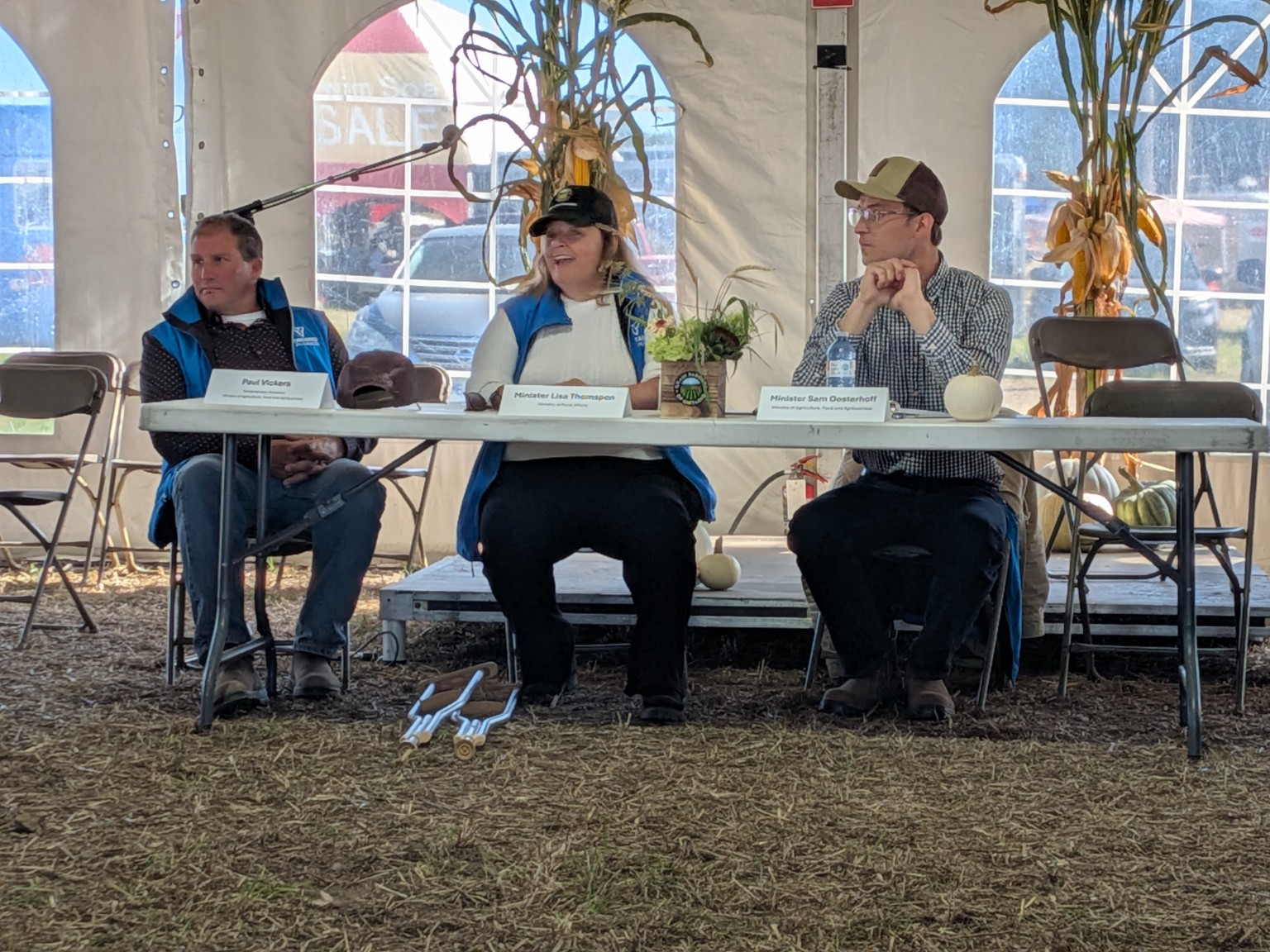
“Good morning! Thank you for the opportunity to speak to you today. Monique and I are here on behalf of Ontario Goat. We are both directors on the board.”
Ontario’s voice matters when federal decisions affect goat farmers.
Ontario Goat has been representing goats since 1950, as stated in the speech. There are between 1,600 and 1,800 goat farms in Ontario, roughly 200 of which are dairy. Like Lindsay said, we represent 90% of the goat milk across Canada. It is very important that you represent us at the federal level. Even though this is a federal issue, we need you there because we are most of Canada.
Figures are those cited in the presentation.
Dairy goats are not supply managed.
Recognize goat dairy’s different market structure in trade decisions.
One thing we need to keep in mind is that dairy goats are not supply managed. With the HS code, we are stuck underneath that, and we could be collateral damage because of the fight between Canada and the U.S. over the quota system.
Traceability must work for dairy and meat goat producers.
Many goat farmers rely on off-farm income. Another expense puts additional pressure on their farms.
Recognize traceability’s importance while keeping it practical for farmers.
Speaker 2: The other issue is traceability: affordability for dairy and meat producers. This is something new to us.
Michele Bowering: Goat farmers are already not making the cost of production, and a lot of them are supporting themselves with off-farm income as it is. Traceability, although it is important, is going to add another expense for farmers. We just want to make sure that, along with traceability, we have affordability.
Speaker 2: Keep it as simple as possible for the farms.
Goats and cows
are different.
Regulations affecting goats should reflect those differences.
The speech noted that SCC penalties had been paused, with concern that they would return.
Ground somatic cell count rules in science specific to goats.
Ensure that the regulations affecting goats are grounded in goat-specific science when it comes to somatic cell count. That is another issue that is coming up. They have paused the penalty system, but it is going to come back eventually. We need to make sure it is science based on goats, not cows, because there is a big difference.
Thank you for listening.
I think, as a goat industry, we are stronger together if we can keep a unified voice. Thank you for the time to speak with you today. Good luck in your new role!
Based on the supplied transcript “Sep 22 at 16-32.txt”, lightly edited for readability. Meeting context supplied by Monique Spanjers. This presentation reflects the remarks given at the meeting.